
Olivia Lanier

Assistant Professor
Department of Chemical and Biological Engineering
Education
Early Career Postdoctoral Fellow, Biomedical Engineering, University of Texas at Austin, 2024
Ford Foundation Postdoctoral Fellow, Colorado School of Mines, Chemical and Biological Engineering, 2021
PhD, Biomedical Engineering, University of Florida, 2019
BS, Chemical and Biomolecular Engineering, Biological Track, Ohio University, 2015
Biography
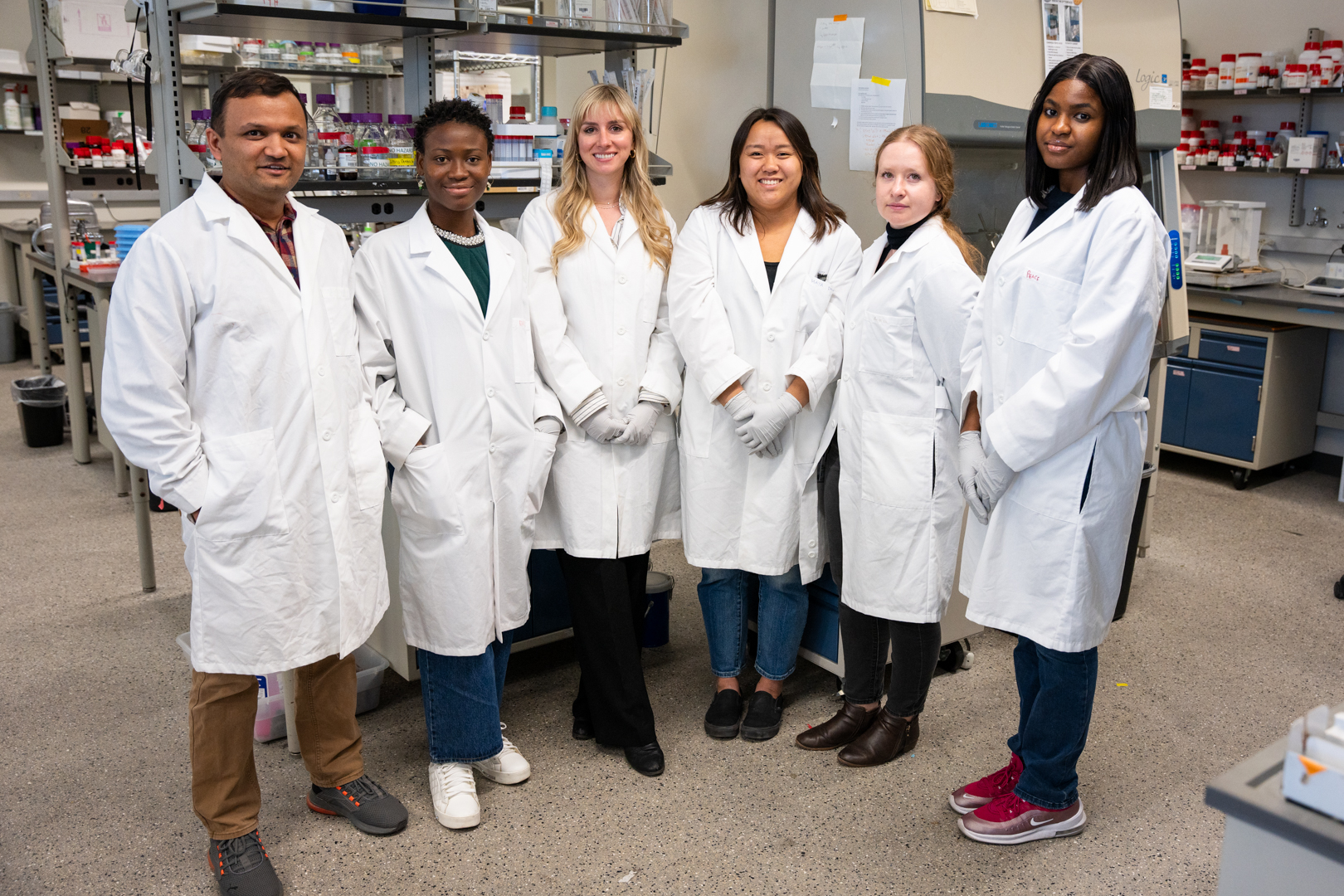
Dr. Olivia Lanier is an Assistant Professor in Chemical and Biological Engineering at the University of New Mexico and leads the Nanomedicine Toward Health Equity Lab. Her research focuses on developing innovative nanomedicine platforms to address health disparities, with a particular emphasis on women’s health, cancer, and equitable therapeutic access. Dr. Lanier is the recipient of the National Institutes of Health R35 Maximizing Investigators’ Research Award (MIRA), which supports her work on understanding sex differences in drug delivery and optimizing vaginal drug delivery systems across the female lifespan. Her lab investigates the biological and physicochemical mechanisms that drive differences in nanoparticle transport, biodistribution, and efficacy across populations, incorporating variables such as sex, age, and hormonal status.
A central goal of Dr. Lanier’s research program is to advance accessible and patient-centered drug delivery routes as alternatives to infusion-based therapies. Her lab develops nanomedicine and biomaterials platforms for oral, sublingual, transdermal, and vaginal delivery, with applications spanning gene therapies and small-molecule drugs. By prioritizing noninvasive and scalable delivery strategies, her work aims to improve treatment adherence, reduce systemic toxicity, and expand global access to advanced therapeutics for historically underrepresented populations. Through the use of clinically relevant polymer- and lipid-based nanoparticle systems, as well as hydrogels and microneedle technologies, Dr. Lanier’s lab tailors drug delivery strategies to physiological changes that are often overlooked in traditional research, including those associated with menstruation, menopause, and aging. Collectively, this work advances both the fundamental science of nanomedicine and its translation toward more equitable and inclusive healthcare solutions.
Laboratory Environment: As the leader of the Nanomedicine Toward Health Equity Lab, I am deeply committed to mentoring the next generation of engineers, particularly those focused on advancing accessible healthcare in women’s health. In our lab, we cultivate a culture rooted in respect, openness, and shared success. I encourage every team member to contribute their unique perspectives and expertise, believing that diversity is a key driver of innovation. We are dedicated to recruiting, retaining, and supporting scholars from underrepresented groups in STEM. My students have access to a wealth of scientific, intellectual, and professional development resources at The University of New Mexico, and I ensure their career goals and needs are supported through individualized development plans.
Selected Publications:
- Maestas-Olguin, A., Dawson, M. M., Quartey, E., Ikwuemesi, P. & Lanier, O. L. Nanoparticle-Mediated Gene Therapy in Women’s Health: Progress, Delivery Challenges, and the Need for Sex, Age, and Ancestry Informed Design. ACS Biomater. Sci. Eng. https://doi.org/10.1021/acsbiomaterials.5c00445 (2025) doi:10.1021/acsbiomaterials.5c00445.
- Green, M. D., Lanier, O. L., Fleming, G. C. & Cosgriff-Hernandez, E. Introducing Health Equity into Biomedical Engineering Education. Biomed Eng Education 5, 389–395 (2025).
- Maestas-Olguin, A., Dawson, M. M., Clark, E. R. & Lanier, O. L. Emerging nanotechnology-enabled siRNA oral delivery platforms. Nanomedicine (Lond) 1–19 (2025) doi:10.1080/17435889.2025.2598337.
- M. Wagner, A., L. Lanier, O.L., Savk, A. & Peppas, N.A. Polybasic nanogels for intracellular co-delivery of paclitaxel and carboplatin: a novel approach to ovarian cancer therapy. RSC Pharmaceutics 2, 553–569 (2025).
- Cisneros, E. P., Morse, B., Savk, A., Malik, K., Peppas, N.A., Lanier, O.L. The role of patient-specific variables in protein corona formation and therapeutic efficacy in nanomedicine. Journal of Nanobiotechnology 22, 714 (2024).
- Lanier, O. L., D’Andrea, A. P., Shodeinde, A. & Peppas, N. A. siRNA delivery from cationic nanocarriers prepared by diffusion-assisted loading in the presence and absence of electrostatic interactions. Journal of Applied Polymer Science 141, e55029 (2024).
- Coolich, M. K., Lanier, O. L., Cisneros, E. & Peppas, N. A. PEGylated insulin loaded complexation hydrogels for protected oral delivery. Journal of Controlled Release 364, 216–226 (2023).
- Pérez-Herrero, E., Lanier, O. L., Krishnan, N., D’Andrea, A. & Peppas, N. A. Drug delivery methods for cancer immunotherapy. Drug Deliv Transl Res 14, 30–61 (2024).
- Lanier, O. L., Green, M. D., Barabino, G. A. & Cosgriff-Hernandez, E. Ten simple rules in biomedical engineering to improve healthcare equity. PLOS Computational Biology 18, e1010525 (2022).
- Lanier, O. L., Manfre, M., Kulkarni, S., Bailey, C. & Chauhan, A. Combining modeling of drug uptake and release of cyclosporine in contact lenses to determine partition coefficient and diffusivity. European Journal of Pharmaceutical Sciences 164, 105891 (2021).